Social Equity in Engineering and Information Technology PhD Scholarship Opportunities

This page is from 2024 and the information below is for reference purposes only. Please visit our scholarships page for current opportunities.
The Social Equity in Engineering and Information Technology Scholarship Program aims to develop a cohort of future Australian research leaders in social equity by providing the selected scholars with access to mentoring and resources.
Critical Dates
- Wednesday 3 June 2024
-
Expressions of Interest Open
- Monday 2 September 2024
-
5.00 pm (AEST)
Expressions of Interest Close
- Week commencing Monday 9 September 2024
-
Shortlisted candidates required for interviews
- Friday 27 September 2024
-
Successful candidates submit full application to the Faculty
About the Scholarships
Launched in 2021, the Social Equity in Engineering and Information Technology Scholarship Program aims to develop the cohort of future Australian research leaders in social equity by providing the selected scholars with access to resources and mentorship.
It provides selected researchers with the opportunity to undertake a PhD through the Faculty of Engineering and Information Technology at the University of Melbourne while receiving additional research, mentoring and training support through the Melbourne Social Equity Institute.
Two new scholarships will be allocated in 2024 for candidates to commence in 2025, with at least one of the scholarships allocated to a domestic student (i.e. citizen or permanent resident of Australia or New Zealand). The second scholarship is open to both domestic and international students.
Established in 2012, the Melbourne Social Equity Institute is one of the University of Melbourne’s five interdisciplinary research institutes. It conducts and facilitates research that addresses the causes and consequences of social inequities and advances knowledge about effective ways to respond.
To be considered for this opportunity, applicants are asked to provide a brief proposal (up to four pages) for a research project that promotes social equity through engineering and information technology.
Projects which are closely aligned with the Institute’s current research priority areas will be highly regarded. The current priority areas are:
- Community-engaged and coproductive research (enabling theme)
- Digital access and equity (enabling theme )
- Gender equity
- Health equity
- Inclusive and distributive economies
- Migration and mobility
Reflecting the nature of social inequities, many of the Institute's research initiatives engage at the intersections of these priorities.
Scholarship Benefits
The scholarship benefits include:
- Full exemption from payment of student fees at the University of Melbourne;
- A stipend of $37,000 per annum (2024 full-time rate, tax free), for 3.5 years;
- Allowances as per the Graduate Research Scholarship Terms & Conditions.
The Melbourne Social Equity Institute will also provide an additional $2000 per annum (a maximum of $6000 during candidature) in research support funds.
The successful candidate will also receive automatic entry to the Institute’s Doctoral Academy.
Supervision
As part of the Expression of Interest process, candidates are asked to provide the name of a proposed PhD supervisor from the Faculty of Engineering and Information Technology. This is to ensure the University of Melbourne has the capacity and expertise to support the proposed project.
The University's Find an Expert site can assist in identifying suitable potential supervisors. If you are unable to identify a suitable and/or available supervisor, please contact social-equity@unimelb.edu.au and we will do our best to assist you.
Learn more about finding a supervisor
Eligibility
Applicants should have a strong PhD research proposal and agreement from a supervisor or team of supervisors to support the research.
The scholarship is conditional upon acceptance into a PhD degree in the Faculty of Engineering and Information Technology, University of Melbourne.
- The University of Melbourne's entry requirements for domestic PhD students
- The University of Melbourne's entry requirements for international PhD students
Successful applicants must be available to commence their studies in 2025. Applicants should have completed tertiary studies that are at least equivalent to a 4-year honours degree at an Australian university with a minimum result equivalent to a first-class Honours (80%). However, for students from an underrepresented or disadvantaged background seeking access and equity considerations, a minimum result equivalent to a second-class Honours Division A (75%) will be accepted.
Applicants should possess excellent interpersonal skills and cross-cultural community skills, the ability to work independently as well as part of a team and excellent written and verbal communication skills. Applicants should have a strong research idea and agreement from a supervisor or team of supervisors to support the research.
People with lived experience of the area of disadvantage or inequity that they intend to research are strongly encouraged to apply.
These scholarships are intended for new applications. Students currently enrolled in PhD study at the University of Melbourne are not eligible to apply.
Applications
Please complete the Expression of Interest Form. Following an interview process, candidates who are selected will then be invited to apply in a competitive round through the Faculty of Engineering and Information Technology.
All Expressions of Interest must be received by 5.00pm (AEST) on Monday 2 September 2024. Please send your completed form to social-equity@unimelb.edu.au.
Melbourne Social Equity Institute reserves the right not to allocate any scholarships where, in its opinion, there are no expressions of interest of sufficient merit.
Further Enquiries
If you have any questions about the application process, please contact Charlene Edwards, Executive Officer, Melbourne Social Equity Institute via charlene.edwards@unimelb.edu.au.
Past Recipients
The Social Equity in Engineering and Information Technology Scholarships were first awarded in 2021. To date, five graduate researchers have been accepted into the program.
- Rashika Bahl

Understanding migrants’ misinformation experiences
- Maharti Triharta

Investigation of sustainable female engineers’ career development: mitigating impacts of gender biological reproductive inequities
- John Paul Cruz
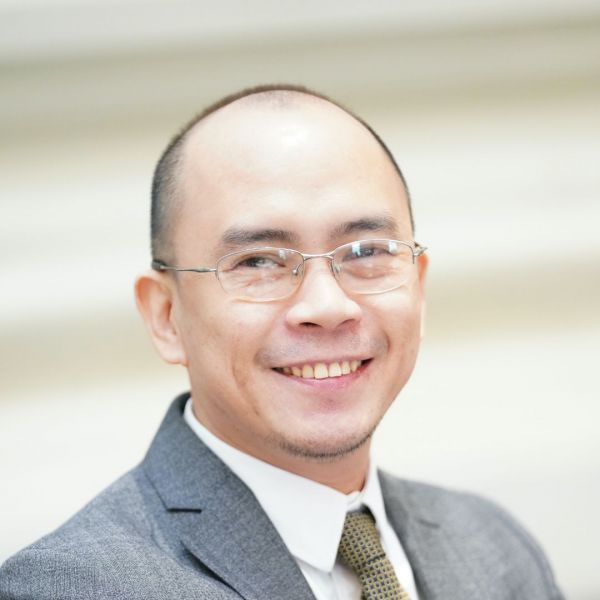
Accessibility in digital technologies: enhancing social equity
- Kavitha Vipulananda

Creating housing solutions for displaced populations
- Guanyu Wang

Digital journeys of international students from Asia: exploring their mental health information behaviours in diverse digital ecology
Rashika Bahl
Understanding migrants’ misinformation experiences
Rashika’s research seeks to better understand how migrants' use of transnational information sources can subsequently influence their misinformation experiences. In particular, Rashika's research aims to push back against the deficit model often used to understand migrants' information and misinformation experiences focus both on where it is that we might be able to support migrants, and where it is that we might learn from them.
Supervisors:
Professor Shanton Chang, School of Computing and Information Systems
Dr Dana McKay, RMIT University
Professor George Buchanan, RMIT University
Maharti Triharta
Investigation of sustainable female engineers’ career development: mitigating impacts of gender biological reproductive inequities
Reproductive inequities in the engineering profession of Australia are prevalent. Female engineers have staggering low fertility rates, and there is high attrition in their 30s coinciding with the child-bearing years, with studies pointing towards masculine workplace cultures resulting in a spectre of reproductive choices. These inequities call for the application of sustainability in the career context that ensures a person-career fit through the critical ages of reproductive choices, as they navigate through the dynamic of occupational and workplace cultural contexts. In this research, Maharti aims to investigate reproductive inequities and address the sustainability in the career development of female engineers.
Supervisors:
Professor Elaine Wong, School of Electrical and Electronic Engineering
Professor Sally Male, Teaching And Learning Lab
Associate Professor Victor Sojo Monzon, Department of Management and Marketing
John Paul Cruz
Accessibility in digital technologies: enhancing social equity
John Paul's research explores how digital technologies can be made more accessible to achieve greater social equity for people with disabilities and older persons. The study investigates the reasons why some digital technologies have more accessibility features than others, and how the uptake of accessibility in mainstream digital environments can be increased. Additionally, the study examines the causes and consequences of different systems, such as social, economic, political, or technical systems, in mainstreaming accessibility in digital technologies. The research aims to identify solutions that promote social equity and ensure that marginalised groups are not excluded from the benefits of digitalisation.
Supervisors:
Professor Shanton Chang, School of Computing and Information Systems
Associate Professor Piers Gooding, La Trobe University
Kavitha Vipulananda
Creating housing solutions for displaced populations
Kavitha’s research seeks to address housing solutions for the displaced populations. The population could be displaced due to varying social issues beyond their control like: war, natural disasters, migration etc. The housing solutions need to be rapid, affordable, timely, cost effective, sustainability and will use innovation, AI and automation of some kind. Kavitha hopes to identify and develop innovative ways to provide housing solutions rapidly to those experiencing displacement.Supervisors:
Professor Priyan Mendis, Department of Infrastructure Engineering
Professor Rebecca Bentley, Melbourne School of Population and Global Health
Dr Nilupa Herath, Department of Infrastructure Engineering
Guanyu Wang
Digital journeys of international students from Asia: exploring their mental health information behaviours in diverse digital ecology
There is a prevalent phenomenon that Asian international students in Australia who have mental health problems are prone to delay treatment until symptoms become quite severe. Guanyu’s research aims to comprehensively explore Asian international students' mental health information behaviour while they study at Australian universities and identify practical disadvantages they may face during their digital journeys. Moreover, the study tries to find feasible solutions to improve online mental health services and support provided by educational institutions and governments, reduce the number of international students who refuse to use these services and supports and increase the possibility of patients receiving timely help.
Supervisors:
Associate Professor Antonette Mendoza, School of Computing and Information Systems
Dr Marc Cheong, School of Computing and Information Systems
About Melbourne Social Equity Institute
Melbourne Social Equity Institute is committed to achieving fairer societies through research that makes a difference. It conducts and facilitates interdisciplinary research that addresses the causes and consequences of social inequities and advances knowledge about effective ways to respond.
It is one of four Interdisciplinary Research Institutes at the University of Melbourne. Each operates with a small directorate and supports and encourages research across disciplinary boundaries.
About the Faculty of Engineering and Information Technology
The Faculty of Engineering and Information Technology at the University of Melbourne educates the innovators of the future, working with industry, government and entrepreneurs to solve real-world challenges.
Its graduates and researchers lead the way in engineering and information technology to build a more sustainable future.