New PhD Research Explores Key Aspects of Reproductive Justice

Image: Jude Merric-John (second from right) and Nida Anees (right) catching up with Melbourne Social Equity Institute's Manager Charlene Edwards, and Professor Louise Keogh and Dr Bronwen Merner from the Reproductive Justice Hallmark Research Initiative.
Melbourne Social Equity Institute and the Reproductive Justice Hallmark Research Initiative have partnered to support new PhD scholarships focused on reproductive justice. Reproductive justice centres the rights of all people to bodily autonomy, to have or not have children, and to parent in safe and healthy environments.
Three graduate researchers have commenced innovative, interdisciplinary research projects that explore distinct aspects of this important field. Nida Anees's research focuses on Afghan women’s experiences of reproductive coercion; Alessandra Joseph's project explores the nexus between harm reduction and reproductive justice; and Jude Merric-John's work explores the survival strategies and care practices that operate within the trans feminine community.
Nida, Alessandra and Jude have received automatic entry into Melbourne Social Equity Institute's Doctoral Academy and will engage with the Reproductive Justice Hallmark Initiative's Early Career Researcher Network.
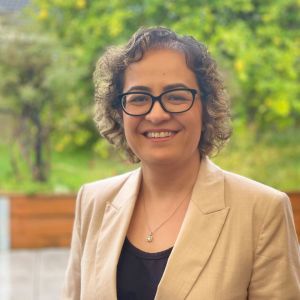
Nida Anees
Navigating Borders and Bodies: Afghan Women’s Narratives of Reproductive Coercion
Supervisors: Professor Laura Tarzia (Department of General Practice and Primary Care), Dr Minerva Kyei-Nimakoh (Department of General Practice and Primary Care) and Professor Heather Douglas (Melbourne Law School).
Prior to commencing your PhD, what were you doing?
In addition to my PhD, I am a Senior Lecturer at Chisholm Higher Education College, where I deliver in the Graduate Certificate in Family Violence and have taught in various other courses in the community services sector since 2015. I also have experience in legal practice and various community services roles, which has provided me with extensive expertise in supporting refugee and migrant communities – including Afghan women – around settlement, safety, education, public health, and wellbeing.
What drew you to start a PhD on this topic?
My interest in this PhD began in 2005 when I was working as a health promotion practitioner and witnessed how reproductive coercion and gender-based violence profoundly impact Afghan and other marginalised women in contexts of conflict, forced displacement and resettlement. As an Afghan Australian woman with lived migration experience, language skills and sector knowledge, I feel a strong responsibility to centre Afghan women’s voices, address critical gaps in knowledge, and contribute culturally responsive, justice-oriented research that advances reproductive autonomy and wellbeing.
What outcomes are you hoping to achieve?
Through this PhD, I aim to generate nuanced, narrative-based insights into how Afghan women experience reproductive coercion and how cultural, systemic, and migration-related factors shape their reproductive autonomy. I hope my research will inform trauma- and culture-informed interventions and service responses that benefit not only Afghan women but all marginalised women facing intersectional challenges—ultimately improving healthcare and justice sector practices and supporting community-grounded pathways for safety, rights, and reproductive justice.
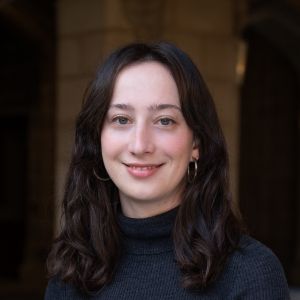
Alessandra Joseph
The Causes and Consequences of Barriers for Women With Complex Drug and Alcohol Use Accessing Care: The Nexus Between Harm Reduction and Reproductive Justice
Supervisors: Associate Professor Nathan Stam (Melbourne School of Population and Global Health), Professor Richard Chenhall (Melbourne School of Population and Global Health) and Dr Bronwen Merner (Reproductive Justice Hallmark Research Initiative).
Prior to commencing your PhD, what were you doing?
Before starting my PhD, I worked as a research assistant at the Centre for Health Equity and as a teaching associate in the Master of Public Health (MPH) program. I completed my MPH in 2024, where my research capstone explored the health and safety experiences of Aboriginal people experiencing homelessness. I have also worked for an abortion and contraception service provider, as a paralegal, and in COVID-19 vaccination outreach. These experiences prior to beginning this PhD have solidified my interest in, and commitment to, health equity and social justice.
What drew you to start a PhD on this topic?
I have long had a deep interest in both harm reduction and sexual and reproductive health, and this project felt like a great opportunity to combine these passions in an under researched but incredibly important area of public health. I am particularly interested in the gendered impacts of complex substance use on women’s reproductive decision making and look forward to exploring this topic through a reproductive justice lens.
What outcomes are you hoping to achieve?
I am looking forward to the PhD experience and hope that this research generates evidence, recommendations, and ultimately influences policy and service delivery to better support women with complex substance use, including in pregnancy, in relation to harm reduction and reproductive decision making. I also hope to develop my skills as a researcher and to connect and collaborate with like-minded academics, service providers and policymakers in this space.
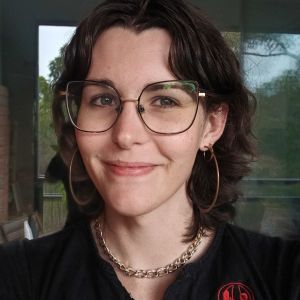
Jude Merric-John
Mothering, Mentoring, and the Intimate Entanglements that (Re)Produce Trans Femininity
Supervisors: Dr Jaya Keaney (School of Social and Political Sciences), Dr Sam Stiegler (Faculty of Education) and Associate Professor Kalissa Alexeyeff (School of Social and Political Sciences)
Prior to commencing your PhD, what were you doing?
I am fortunate enough to be starting my PhD shortly after completing an Honours thesis in Gender Studies at the University of Melbourne. With my current project being very much a continuation of the ideas I began exploring during this earlier research, my Honours thesis explored the fraught, contentions affects that are enmeshed within the sexual aspects of trans feminine experience, as illustrated in recent works of trans fiction. My arguments concerned the stakes of emphasising a truly sex-positive trans politics, even when doing so may involve taking seriously those experiences that may be deemed problematic or otherwise politically inconvenient. These are, ultimately, the issues of trans survival that continue to inform my current work with this PhD.
What drew you to start a PhD on this topic?
Perhaps a deceptively simple response, but my desire to pursue research into transgender issues is in many ways no more complicated than the fact that I myself am trans, as are so many of my nearest and dearest. When crafting my initial proposal for this PhD and thinking about how this nebulous thing called "trans femininity" might be understood as socially heritable and transmissible, my thoughts invariably turned to the small acts of care I witness daily taking place between so many beautiful trans people, that in ways both large and small work to prolong the survival of this community, if only for a little while. Much as the work of theorising marginality is already taking place within the communities most affected by othering, I need only look to my loved ones and the worlds they variously inhabit to find the inspiration, and the materials, that underpin my research.
What outcomes are you hoping to achieve?
Through this project I intend to explore the ad hoc survival strategies and care practices that operate within trans feminine community relations, understood within a context of the overwhelming deficits of traditional support services. I will look to chart how trans feminine people work to nurture and prolong the survival of already-existing members of the community, as well as create the conditions for closeted or newly-out trans fems to explore their becomings and have their lives prior to, during, and beyond transition nurtured. This latter point in particular illustrates my desire to explore how trans femininity and trans feminine individuals are “reproduced” in the face of systemic efforts to suppress or outright eradicate the community writ large. In examining quotidian frameworks of trans survival as a reproductive justice issue, I hope that my work will add momentum to growing efforts to expand our understandings of reproductive justice beyond dominant conversations around natal parenthood, family, and kinship.
Published on Monday 27 January 2026