New PhD Research to Focus on Micromobility and Equitable Travel Options
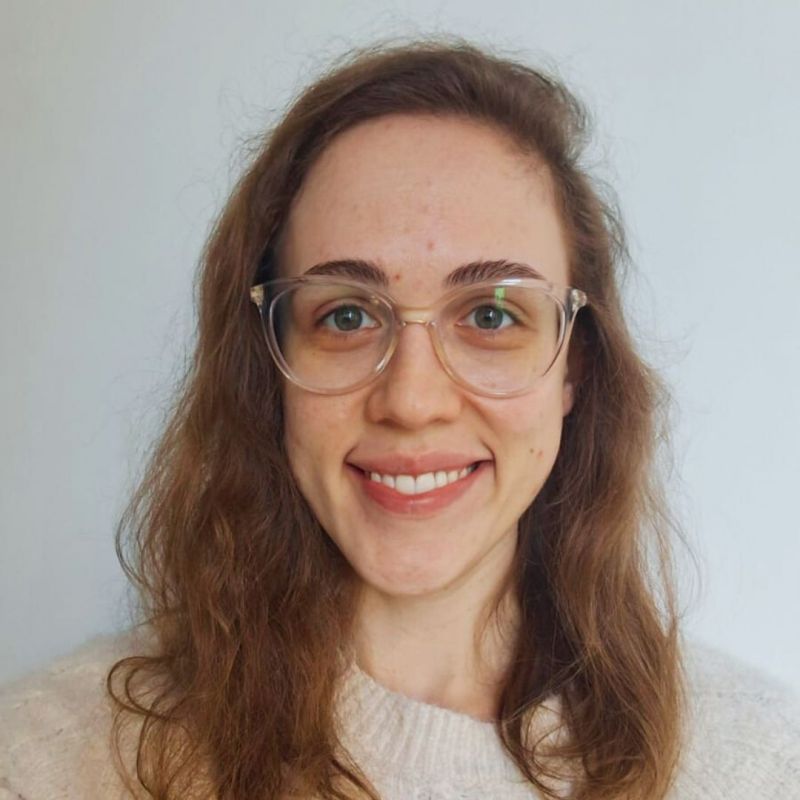
Ana Paula Soares Müller is Melbourne Social Equity Institute's newest PhD scholarship holder, joining the growing cohort of Social Equity in Engineering and Information Technology Scholars.
Since 2021, Melbourne Social Equity Institute has partnered with the Faculty of Engineering and Information Technology (FEIT) to offer annual PhD scholarships for new research projects that promote social equity through engineering and information technology.
The selected researchers undertake a PhD through FEIT while receiving additional research, mentoring and training support through Melbourne Social Equity Institute. To date, projects have focused on a range of challenges including misinformation, accessibility in digital technologies and housing solutions for displaced populations.
This month, we are pleased to welcome the newest Social Equity in Engineering and Information Technology Scholar, Ana Paula Soares Müller. Ana's research focuses on equitable and inclusive micromobility and the right to move independently. Micromobility is a term that refers to activities such as walking and cycling, and is a key element of equitable travel options.
Micromobility planning often fails to include the needs of groups experiencing marginalisation, such as people with disabilities, those with low incomes and older people. Ana's PhD research will use a social theories approach to develop new metrics to assess micromobility to improve policy and planning.
Ana's PhD research will be supervised by Dr Patricia Sauri Lavieri, a senior lecturer in transport engineering from the Department of Infrastructure Engineering, alongside Dr Páraic Carroll from the Faculty of Architecture, Building and Planning and Professor Alejandro Ruiz-Padillo from the Federal University of Santa Maria (Brazil).
We asked Ana to tell us more about herself and her work.
----
Ana Paula Soares Müller
Thesis title: Defining accessibility metrics for equitable and inclusive micromobility: an approach based on needs and capabilities
Prior to commencing your PhD, what were you doing?
Before my PhD, I had mainly been working as a volunteer collaborator in the Mobility and Logistics Laboratory (LAMOT) at the Federal University of Santa Maria, in Brazil. Within LAMOT, I was able to further develop my master's research in the area of accessibility for pedestrians with different disabilities, and to publish some relevant papers in this field. Prior to this, I was working as a substitute lecturer at the Sul-Rio-Grandense Federal Institute, also in Brazil, where I had the opportunity to develop important skills as a teacher and researcher.
What drew you to start a PhD on this topic?
Understanding the importance of equity and accessibility is something that has been growing within me since an early age. I have lived within contexts of strong social inequity and have seen the consequences of inaccessibility throughout someone's life. My whole academic life was built through public schools, and my best friend from childhood is a wheelchair user. So accessible mobility has always been a synonym of quality of life for me. As I have grown more mature and started to understand my privileges in moving and accessing desired places and opportunities, while so many around me were unable to, I took it as my goal to work towards enabling equitable and accessible mobility, especially for the more vulnerable and excluded individuals. As a researcher, I’m confident that the PhD is the next big step towards achieving it.
What outcomes are you hoping to achieve?
Being able to undertake a PhD in transport engineering at the University of Melbourne is a dream come true. I believe it will allow me to develop a great set of skills to become a better researcher and professional. I expect my research to actively collaborate towards more equitable micromobility, especially for those who need it the most: people who are bound to limited and limiting conditions of mobility.
I hope that my work can provide policymakers and urban planners with valuable insight towards the construction of more accessible cities, attentive to individuals perceptions and capabilities. Ideally, I expect to contribute to the practical improvement of micromobility conditions, both in Australia and in my home country. And I’ll certainly be doing my best to get there.