Equitable Foundations: A Framework and Case Studies for Gender-wise Philanthropy in Partnerships
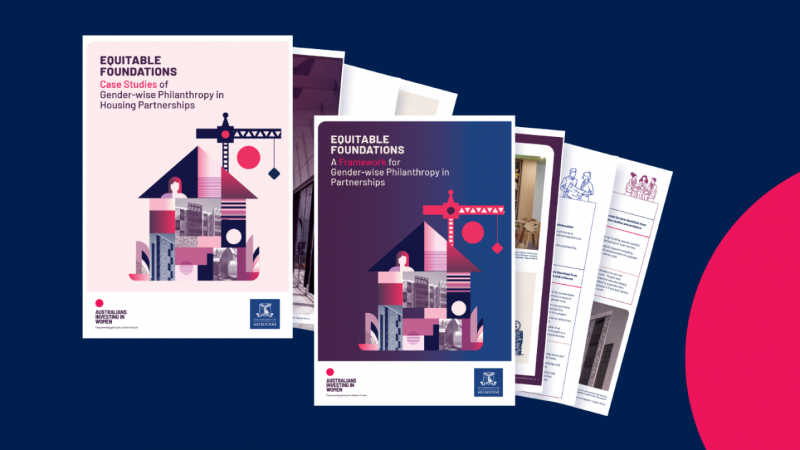
A new resource and case studies report aims to improve the effectiveness of investment by the philanthropic sector by understanding and responding to disadvantage and gender inequality.
Philanthropy has the power to play a pivotal role in addressing society's complex challenges. By using a gender lens – which considers the ways in which gender identities, roles and norms affect a particular issue – funders can ensure that their efforts are responsive to the unique needs of women and other marginalised groups.
Melbourne Social Equity Institute and Australians Investing In Women have collaborated to create two new resources to support philanthropic partnerships in applying a gender lens to their work. In doing so, the philanthropic sector and other funders and partners can improve the effectiveness of investment by understanding and responding to disadvantage and gender inequality in their area of focus.
Equitable Foundations: A Framework for Gender-wise Philanthropy in Partnerships draws on the experiences of funders and partners in projects supporting women’s housing to map out gender-wise principles and pathways forward that can be applied to any collaboration seeking to positively impact any social issue.
The Case Studies of Gender-wise Philanthropy in Housing Partnerships report provides a detailed account of the experiences of funders and partners in projects supporting women’s housing, adding to knowledge of how partnerships function and what makes them effective and sustainable.
This research was undertaken by an interdisciplinary team – Dr Alexandra Williamson, Professor Kylie Smith, Dr Victor Sojo and Professor Jo Barraket – at the University of Melbourne, in partnership with Australians Investing in Women.
Professor Jo Barraket AM, Director of Melbourne Social Equity Institute, explains "the lenses through which we view the world affect what we prioritise, who we see and what levers we pull to create positive change. Increasingly, such change relies on partnerships and collaboration to bring the best combination of resources, experience and will, to solving wicked problems."
By increasing the understanding and application of a gender lens to philanthropic partnerships, the framework and case studies strive to improve investment in gender equity. By taking an intersectional approach that recognises gender as one of many forms of disadvantage, these partnerships can be more effective in creating long-term, sustainable solutions to address society's complex challenges.
To learn more about the project and to access the framework and case studies, please visit the Australians Investing In Women website.
This research is funded by Paul Ramsay Foundation.