The Good, the Bad and the Ugly of Lived Experience Research (Video Available)
Room 202/203
Level 2, Melbourne Law School Building
185 Pelham Street
Carlton
Share via
More Information
The Good, the Bad and the Ugly of Lived Experience Research: what are some things to consider in this work?
Melbourne Social Equity Institute has a deep commitment to community engaged and coproductive research. These approaches recognise the significant expertise of people affected by social inequities and engages with them as active agents in designing research for positive social change. One approach to coproducing research with communities is to involve lived experience researchers as core members of research teams.
Lived experience researchers are often lay people who undertake research within their own communities, particularly in the fields of health and social inquiry. High-quality and rigorous lived experience research can lead to local, national and international policy and practice impacts; however, if managed poorly, the involvement of lived experience researchers has the potential to be extractive, inequitable and disempowering.
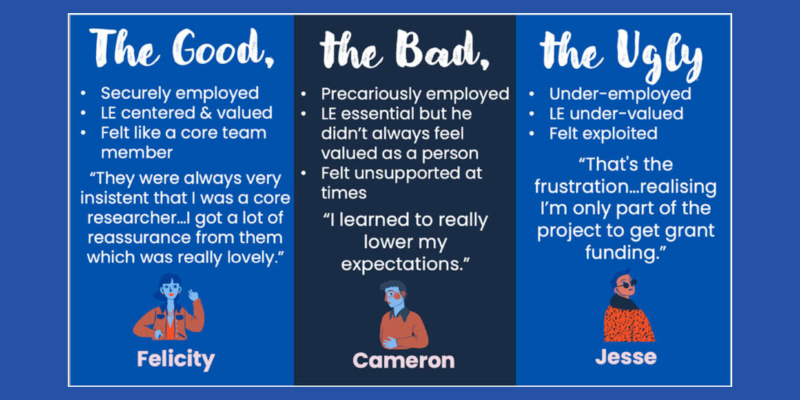
In 2024, as part of a Master of Public Health, Charlene Edwards, the Institute’s Manager and Director of the Community Fellows Program, undertook a research project that sought to understand the motivations, expectations and aspirations of former or current lived experience researchers at the University of Melbourne and how these expectations might be met. The project also explored what institutional supports are required to embed ethical, empowering and equitable lived experience research practices.
In this seminar Charlene uses a social ecological model to look at what the project’s findings mean at different levels: for individuals, for relationships between people, for the University and for policy.
At a time when the involvement of people with lived experience in research is fast becoming a prerequisite for some funding streams, this project shows why it is important to intentionally establish strong foundations supporting the ethical and equitable participation of lived experience researchers across all parts of the research process.
Seminar Video
Download the Slides (PDF 2.6 MB)
Speaker Biography
Charlene Edwards is Manager and Community Fellows Program Director at the Melbourne Social Equity Institute, University of Melbourne. She facilitates interdisciplinary and community-engaged research across a broad range of social equity issues. She is the co-creator of the Community Fellows Program and is deeply committed to inclusive and emancipatory research practices. Charlene holds a Bachelor of Arts (Honours) in Music and Drama/Theatre Studies from Royal Holloway, University of London, a Postgraduate Diploma in Marketing from the Chartered Institute of Marketing and a Master of Public Health from the University of Melbourne.