Dr Liz Gill-Atkinson
How do women with disability in the Philippines understand and experience participatory research practice?
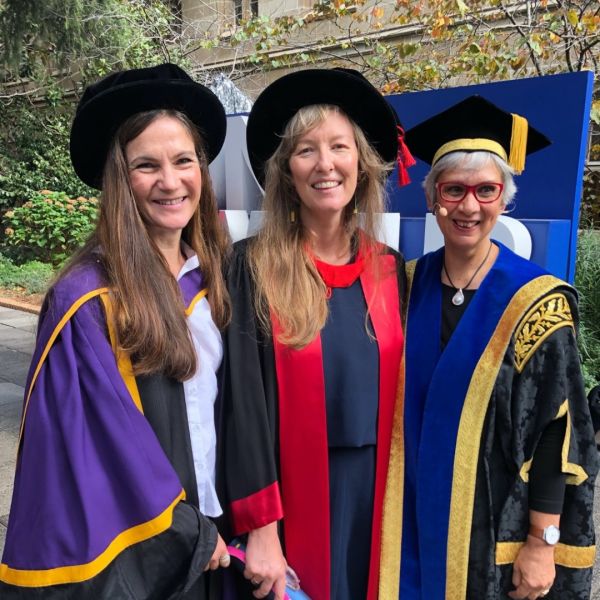
Graduated in 2022
Project Description
This thesis explores how women with disabilities in the Philippines understand and practice participatory research, with a view to strengthening research practices as they relate to women with disabilities. Women with disabilities have the right to participate in research and development programming, and would arguably benefit from active involvement in participatory research projects. However, many do not have the opportunity to do so and knowledge about the experiences and effects of active involvement in participatory research for women with disabilities in southern countries is limited.
Participatory research aims to facilitate empowering and social and structural change outcomes (such as tangible improvements to policies and laws, service provision, and cultural and social norms) that benefit disadvantaged groups and individuals. Whilst studies confirm that participatory research can facilitate empowering outcomes for community members involved in these projects, there is scarce evidence to suggest that this is the case for women with disabilities in the global south. Compared to other disadvantaged groups, the accounts and perspectives of women with disabilities from southern countries are under-represented and under-examined across the sizeable body of participatory research literature.
To improve understanding of this issue, I conducted a feminist investigation of a case study of participatory action research conducted with diverse women with disabilities in the Philippines: the Women with Disabilities taking Action on Reproductive and sexual health (W-DARE) program. Using varied qualitative research activities, I collected data across multiple time points from 16 women with disabilities and 19 ‘Key Informants’ (other members of the W-DARE research team) to better understand the experiences and effects of active involvement in the W-DARE program for women with disabilities. An integrated conceptual framework, combining elements of a rights based approach to disability, intersectionality, and models for understanding empowerment, power, and sources of capital, informed my analysis of research findings.
Supervisors
Professor Cathy Vaughan, Melbourne School of Population and Global Health
Professor Marilys Guillemin, Melbourne School of Population and Global Health