New PhD Research Focuses on Gender and Social Equity
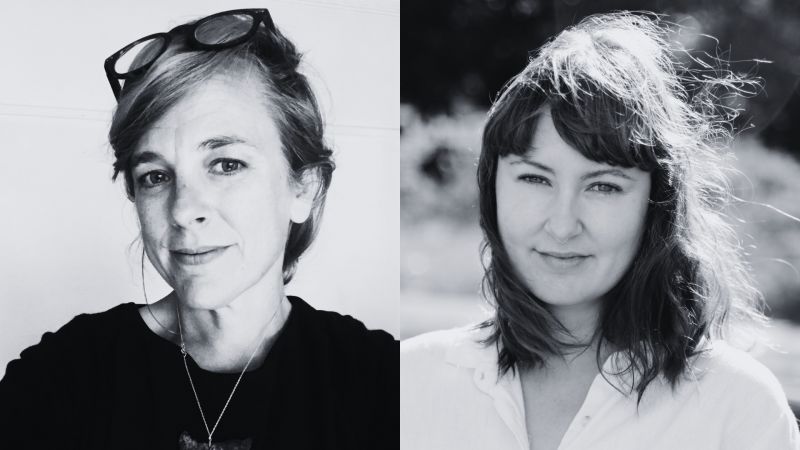
Megg Evans and Melanie Scammell are our newest PhD scholarship holders.
In February we welcomed two new graduate researchers who will be undertaking a PhD with the support of a Melbourne Social Equity Institute Strategic Scholarship.
Megg Evans is conducting research focused on solo mother-headed homes and aims to challenge deficit-based framings and stereotypical narratives. Her supervisors are Dr Karen Burns, an architectural historian and theorist from the Faculty of Architecture, Building and Planning and Dr Erika Martino, a Research Fellow in Healthy Housing from Melbourne School of Population and Global Health.
Melanie Scammell will complete her PhD through creative work and a dissertation, focusing on addressing gender-based violence in screenwriting. Melanie’s supervisors are Dr Angie Black, an award-winning film director and Senior Lecturer in Film and Television at Victorian College of the Arts, and Dr Janice Loreck, co-organiser of the Melbourne Women in Film Festival and a Senior Lecturer in the School of Culture and Communication.
In addition to their scholarships, both Megg and Melanie will receive additional funds from Melbourne Social Equity Institute to support their research and have automatic entry into the Doctoral Academy.
We asked Megg and Melanie to tell us more about their research.
—-
Megg Evans
Thesis title: Domestic Resilience: Psycho-Spatial Narratives of Solo Mother-headed Homes
Prior to commencing your PhD, what were you doing?
I've been a tertiary architecture history and theory educator and practicing designer for twenty years. During COVID I studied psychology and family therapy, and previous studies included social theory and biotechnology, so my interest in the biopsychosocial, cultural, and spatial determinants of wellbeing operating in our homes came naturally.
What drew you to start a PhD on this topic?
Life experience informs my research project. Solo mother-headed households often sit at the intersection of gender, care, housing precarity, and social policy, yet their everyday spatial realities are often under-considered and poorly represented in social, architectural, health, and policy discourses. If necessity is the mother of innovation, then solo mothers, and the homes they cultivate, hold insightful keys to persistent social, spatial, and psychological problems that beset our society.
What outcomes are you hoping to achieve?
I hope the research of these families inspires more socially responsible and responsive housing design and planning, inspires more caring policy discussions, and leads to greater intergenerational social equality. The social justice embedded in the project aims at empowering solo-mothers, reframing their acts of resistance and resilience as responses to traditional housing design, social inequity, cultural prejudice, and structural discrimination. I am appealing for systemic change.
Melanie Scammell
PhD project title: Changing the Screen Story: A Screenwriting Framework for Addressing Gender-Based Violence (Creative Work and Dissertation)
Prior to commencing your PhD, what were you doing?
Alongside my work as a screenwriter and script editor, I have been working for the last six years as a teacher and mentor in VCA’s Master of Screenwriting program. I have also been working in gender-based violence prevention and response for over 12 years now, across areas including policy, advocacy, governance, media and communications, and direct service.
What drew you to start a PhD on this topic?
For my whole career my creative work has centred around themes and issues of gender inequality and gender-based violence. Because I am in such a unique position - being a screenwriter and also working in the family violence sector - I wanted to find a way to combine these two fields with an outcome that goes beyond my own creative practice. I feel strongly that there is an opportunity for film and television - and specifically, the way we write film and television scripts - to contribute to the shifting of community attitudes towards gender inequality and ultimately, gender-based violence.
What outcomes are you hoping to achieve?
More than anything, I want my research to have a practical application in the film and television industry. I hope other screenwriters, film schools, production companies and screen agencies can utilise my research to make our industry and the stories we tell more ethical, accessible and equitable. I’m very excited to dive into this work!